Looking Back on ICNS 2025
The 22nd Interdisciplinary Conference for Netherlandic Studies is now behind us. I know I speak for those who attended when I say it was a resounding success. Held at the University of North Carolina Chapel Hill on June 6 and 7, the conference theme was “Shaping the Future” with a special focus on 50 Years of Independence for Suriname.
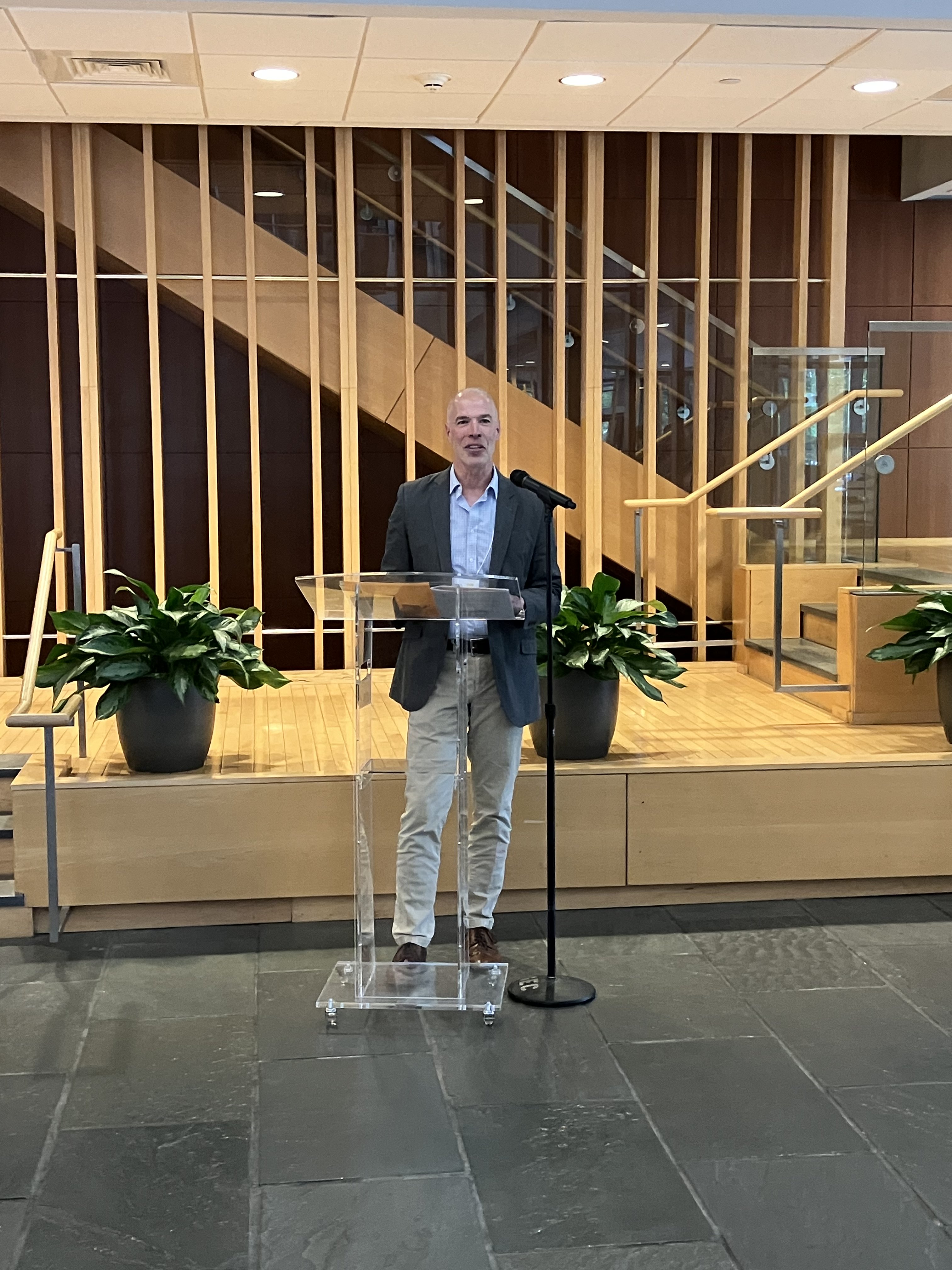 Before any further comment on the conference, I want to first acknowledge Professor Dan Thornton from UNC Chapel Hill, who hosted the conference. Thank you, Dan, for beautifully arranging all the many details of the conference, making it such a convivial gathering and smooth running operation!
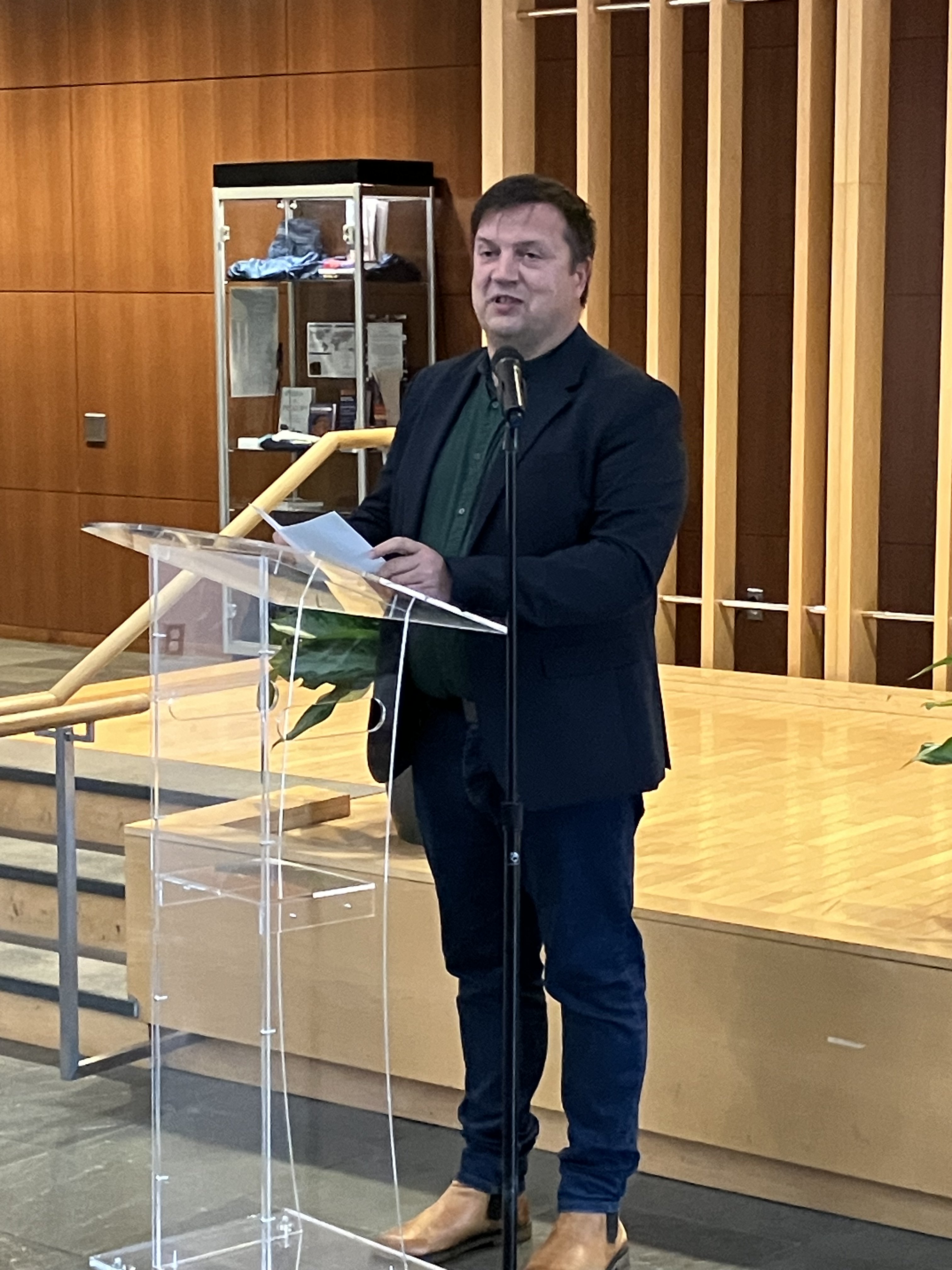
We note, too, how honored we were that Gunther Van Neste, Secretary General of the Taalunie attended both the pre-conference Dutch Instructors Workshop as well as the conference itself. To our recollection, this was the first time that the top functionary of the Taalunie personally attended the conference. We thank him for this significant gesture and for the inspiring words in his address to conference attendees at the opening reception.
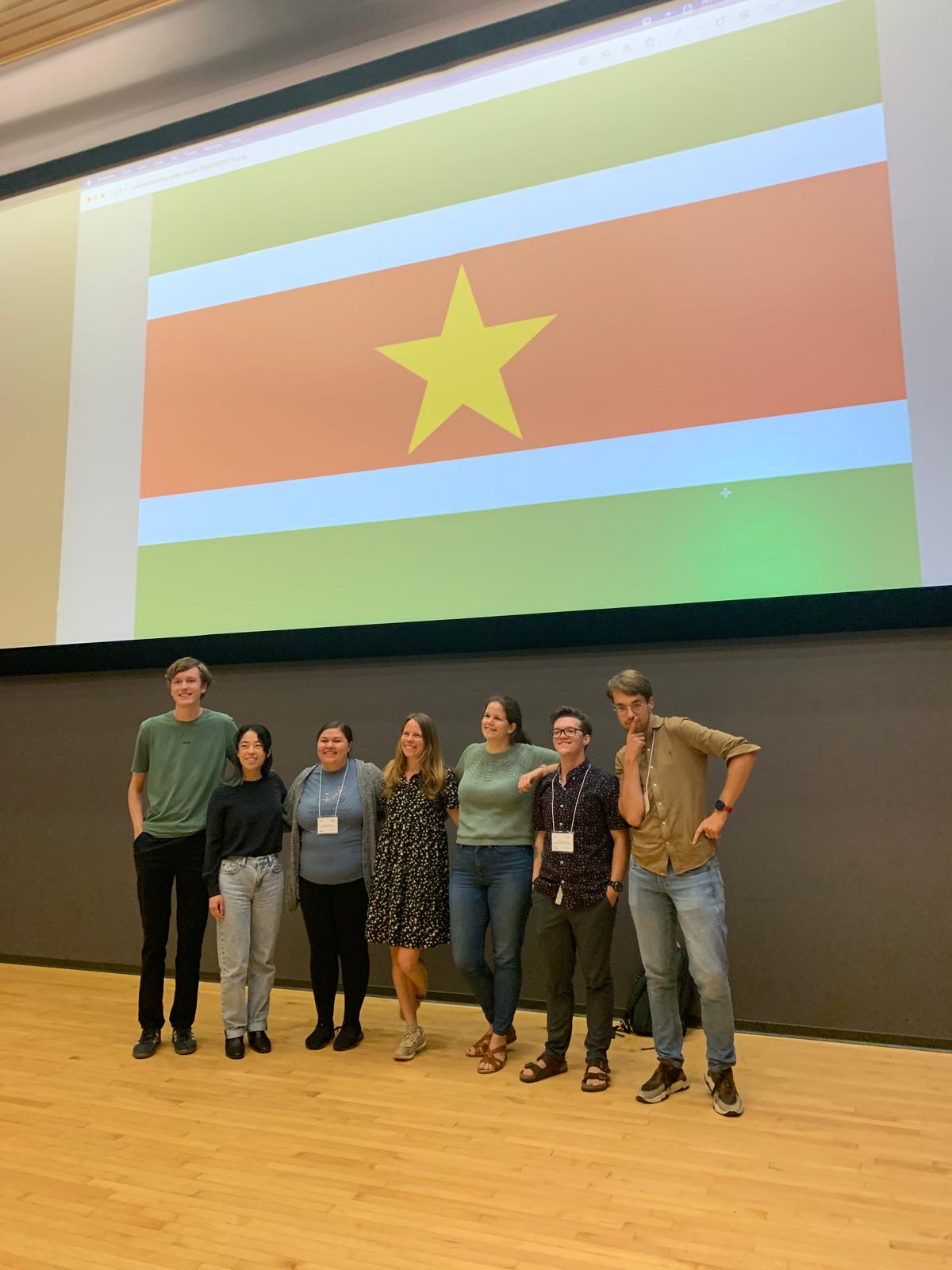
The conference itself featured over 30 papers by scholars from Belgium, Canada, the Netherlands, Poland, Suriname, the United Kingdom, in addition to those from the United States. It was particularly gratifying and encouraging to have a half dozen graduate students in the lineup of presenters.
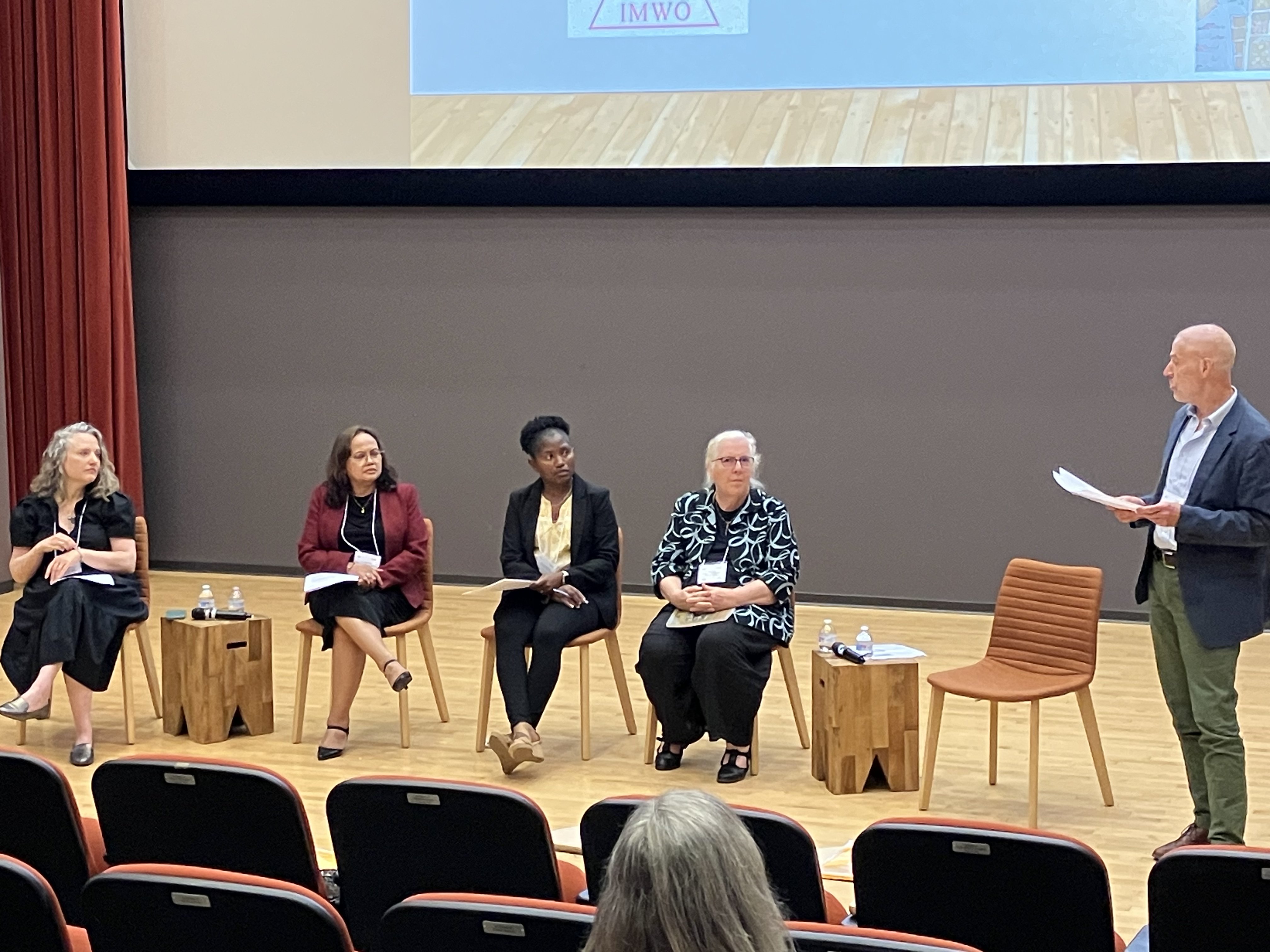
This year’s conference featured two distinct keynote lectures. The first was part of the conference’s special focus on Srefidensi: Suriname at 50 Years. Hilde Neus of the Anton de Kom Universiteit spoke to the plenum of “Rising to a Suriname Future by Learning from the Past.” Her keynote was followed by a robust panel discussion featuring Hilda herself, Rita Tjien Fooh of the Nationaal Archief van Suriname, and from the University of Michigan’s new Suriname focused Dutch-Studies Program, Denice Gravenstijn and Annemarie Toebosch.
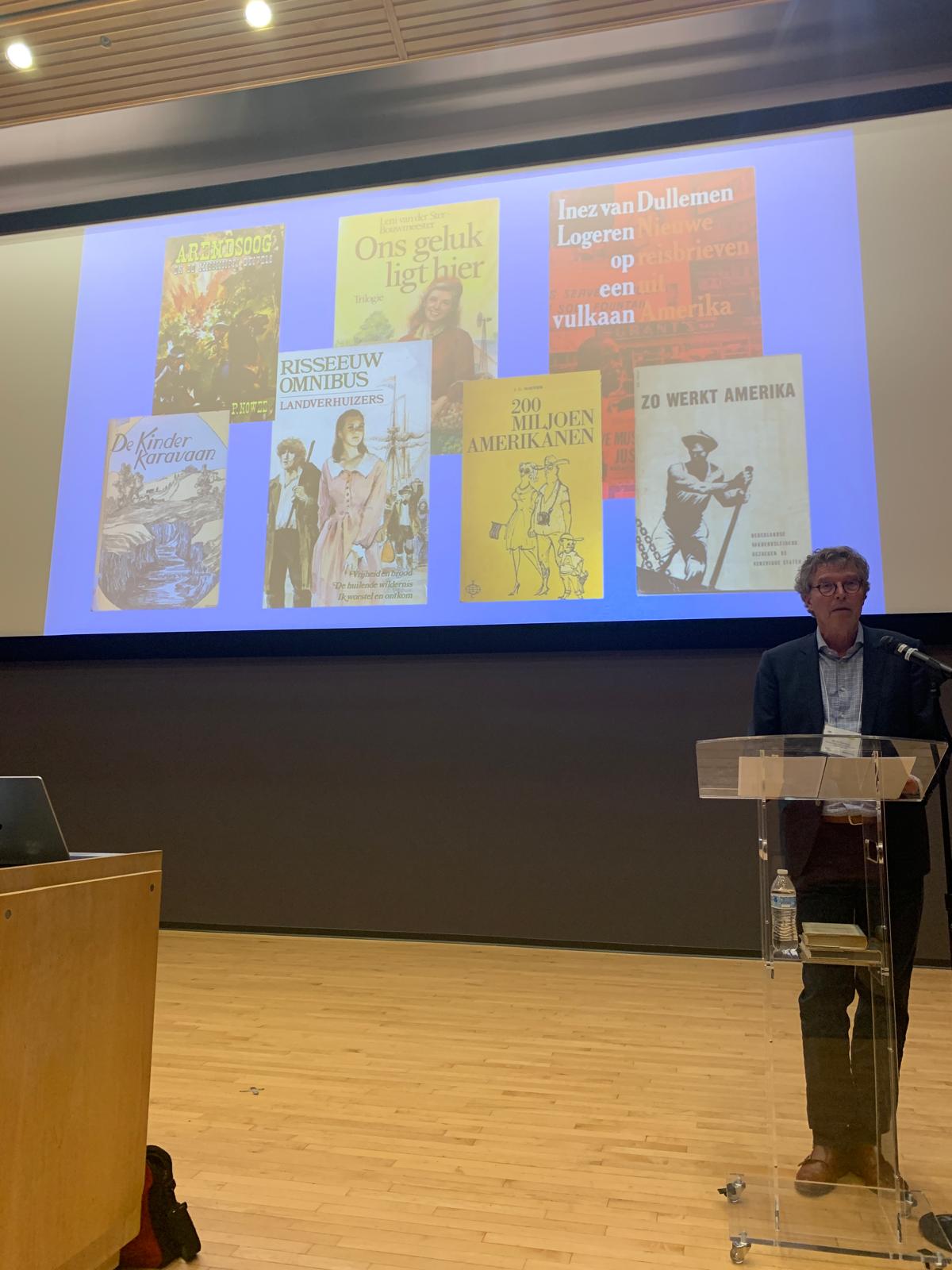
The second keynote concluded the conference on Saturday and featured Ton van Kalmthout of the Huygens Instituut and the Rijksuniversiteit Leiden. Ton drew the audience into the “Dutch-American Emigration Literature after World War II,” after which an engaging round of questions and answers ensued.
While it is not possible to even begin summarizing the papers, we heard plenty of comments lauding the overall high quality of the presentations. Thank you to all of you who presented for sharing your scholarship and insights. Board member Jesse Sadler will shepherd publication possibilities from this conference. Be on the lookout for a communication from him about submission procedures to Dutch Crossing: Journal of Low Countries Studies, the academic journal with whom the ICNS has had the pleasure of partnering for many recent conferences.
As is customary, a business meeting for all members of the AANS was held at the conference. One item worth mentioning here is that the board recommended and members supported the addition of a third member-at-large on the board. Thereupon the members supported the nomination of Esmée van der Hoeven (University of California at Berkeley) as new board member.
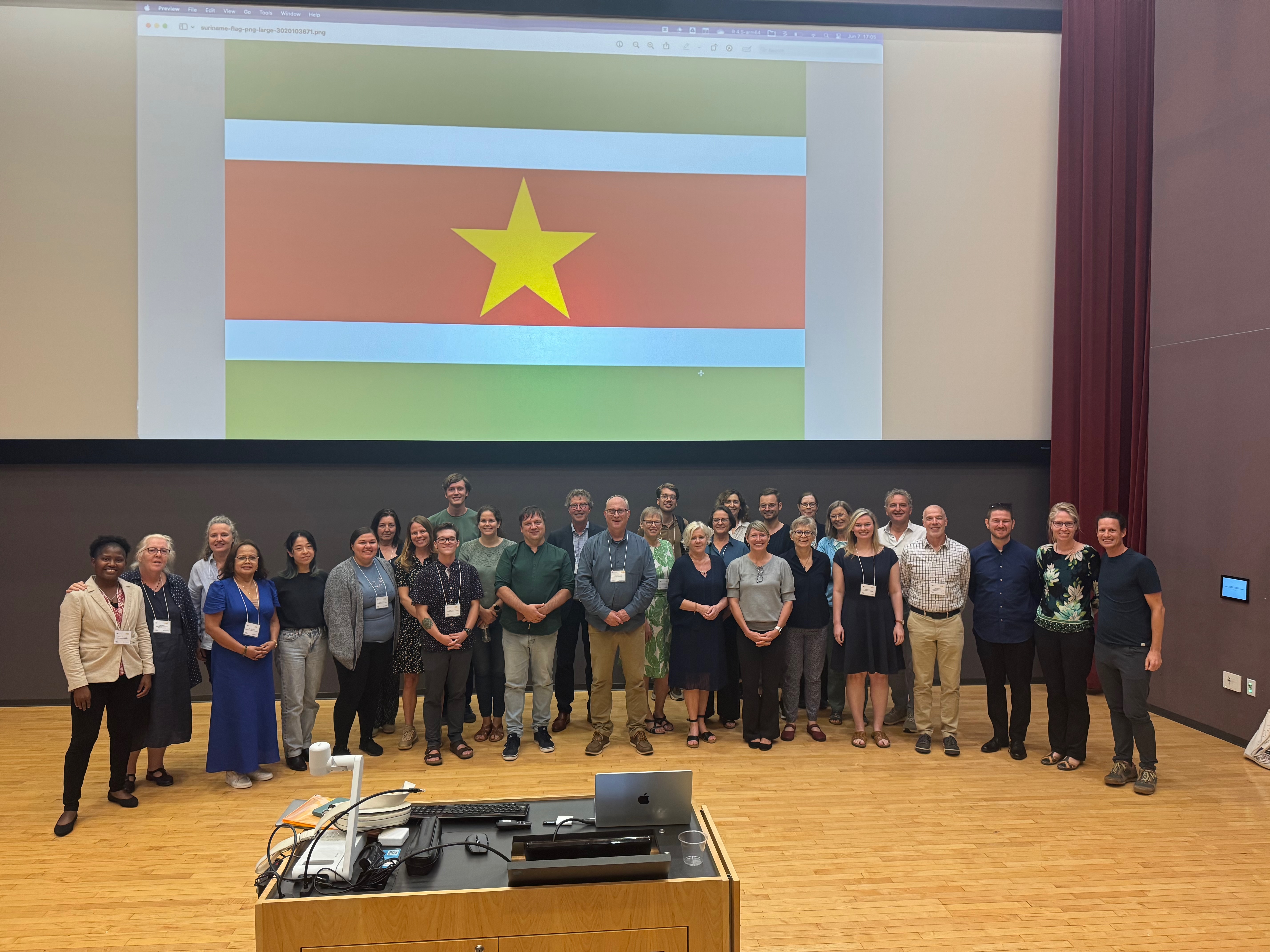
We look forward to finalizing decisions about where the next ICNS will be held in 2027. We will communicate that as soon as we are able.
Best wishes to you for a fruitful and rejuvenating summer break.
On behalf of the AANS Board,
Herman de Vries
President
Call for Applications: Dutch language-course in May-June 2026 for Graduate Students (tuition-free)
Applications are invited for a three-week intensive Dutch course ("the summer course"). The course is free-of-
charge; funding has been provided through the Taalunie (Union for the Dutch Language).
The course has two distinct sections, and students may apply to the first section (Modern Dutch for Reading
Knowledge, via Zoom), and/or the second section (Early Modern Dutch/Paleography, in person at Columbia
University, New York). Applicants are requested to clearly state which sections they are applying to, by
stating it in boldface on the letter of purpose.
ALL APPLICATIONS ARE DUE APRIL 1, 2026
Schedule:
two weeks of Modern Dutch for Reading Knowledge (through zoom)
week I: Tuesday May 26 through Friday May 29
week II: Monday June 1 through Thursday June 4
class times: 10:15 a.m. - 12:15 and 1:45 - 3:45 p.m. (New York time)
one week of 17th-century Dutch/paleography (in person at Columbia University, New York)
week III: Monday June 8 through Thursday June 11
class times: 9:30 a.m. - 12:00 and 1:30 - 4:00 p.m. (New York time)
Descriptions of the courses and requirements for admission to each section
Week I & II: Modern Dutch for Reading Knowledge
This section will cover reading strategies, grammar and vocabulary of modern Dutch. Participants will
continue building their vocabulary skills throughout the course. There is a strong emphasis on grammar
skills; they will be the basis of reading strategies.
Open to all students with 2 semesters of Dutch (or 3 semesters of German) at the college level or equivalent.
Applicants must submit evidence of sufficient competence in the language, and submit a letter of purpose
explaining their reason for application. Preference will be given to students enrolled in a PhD program, but
M.A. students/Faculty members may apply as well. Applicants who are unsure if their level of Dutch or
German is satisfactory should contact Wijnie de Groot (wed23@columbia.edu).
Week III: 17th-century Dutch texts/paleography workshop
The workshop will cover reading strategies of 17th-century printed and handwritten texts. The paleography
part of the week will be taught by Dr. Frans Blom of the University of Amsterdam. Although both sections can
be taken separately, applicants are encouraged to participate as well in the first section, as week III will build
on reading strategies learned in the first two weeks.
Open to all students with 3 semesters or more of Dutch or German at the college level or equivalent. Applicants
must submit evidence of competence in the language. In addition, applicants must submit a letter of purpose
explaining their reason for application.
Preference will be given to students enrolled in a PhD program, but M.A. students/Faculty members
may apply as well.
Contact Wijnie de Groot (wed23@columbia.edu) for additional information and questions.
************
All applications, along with supporting documents,
should be emailed to Wijnie de Groot at wed23@columbia.edu.
Inquiries should also be directed to Wijnie de Groot.